Scrolling Yourself Sad: How Social Media's Perfect Illusion Is Quietly Wrecking Your Wellbeing
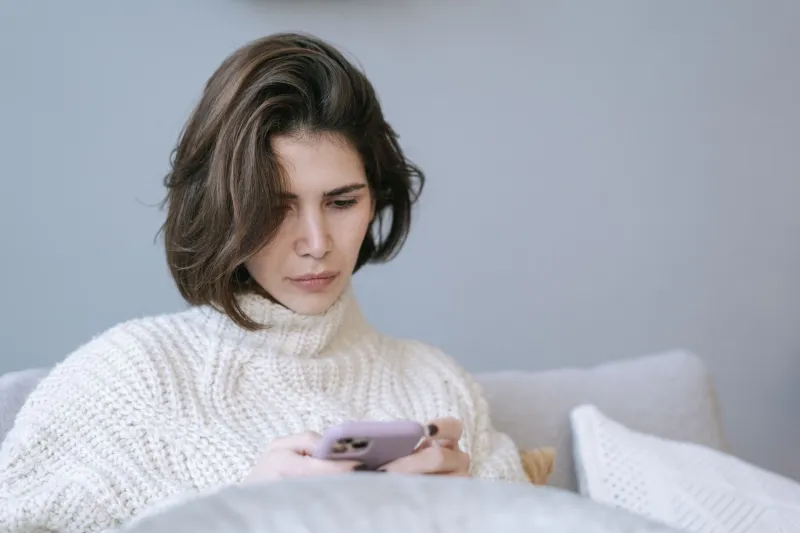
It usually starts innocently enough. You're waiting for the kettle to boil, so you reach for your phone. A few taps later and you're deep in someone else's perfectly lit kitchen, their spotless worktops, their aesthetically arranged avocado toast. Then comes the gym selfie. Then the promotion announcement. Then the holiday photos from a beach you've never heard of but are now desperate to visit.
By the time the tea's brewed, you feel vaguely rubbish — and you're not entirely sure why.
This is the comparison trap in action. It's quiet, it's insidious, and according to a growing body of research, it's doing real damage to our mental health.
Why Your Brain Is Wired to Compare
Here's the thing: comparison itself isn't the enemy. Humans have always sized themselves up against others — it's an evolutionary mechanism that helped our ancestors gauge social standing, safety, and opportunity. The problem is that our brains were never designed to process the sheer volume of comparison data that social media delivers in a single scroll.
Psychologists refer to this as social comparison theory, first proposed by Leon Festinger back in 1954. We have a natural drive to evaluate ourselves against those around us. When we compare upward — looking at people who seem to have more, look better, or achieve greater things — it can either motivate us or deflate us. On social media, it almost always does the latter.
Why? Because what we're comparing ourselves to isn't real life. It's a curated, filtered, carefully constructed version of someone else's existence. Nobody posts about the argument they had before that romantic dinner. Nobody captions their holiday snap with "actually cried in the airport loo on the way here." We're measuring our unedited, messy, complicated reality against everyone else's greatest hits — and we're losing every time.
The Anxiety Loop Nobody Talks About
For many people in the UK, social media use has become deeply intertwined with anxiety — and it's a self-reinforcing cycle. You feel low, so you scroll for distraction. Scrolling makes you feel worse about yourself. Feeling worse makes you seek validation through likes and comments. When that validation doesn't arrive quickly enough, the anxiety spikes again.
A 2019 report from the Royal Society for Public Health found that social media platforms — particularly Instagram — were linked to increased rates of anxiety, depression, poor body image, and loneliness among young people. But this isn't exclusively a youth issue. Adults across all age groups are caught in the same loop, whether they're comparing career trajectories on LinkedIn, lifestyle aesthetics on Instagram, or parenting approaches on Facebook groups.
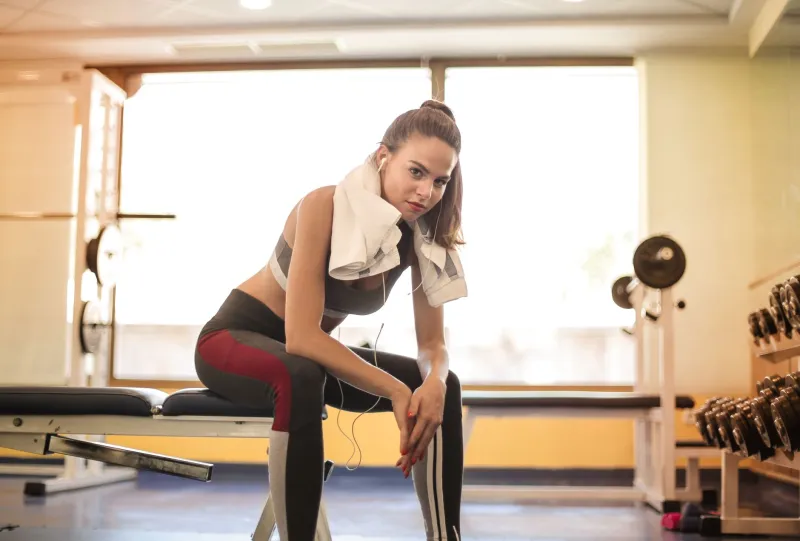
The wellness space online is arguably one of the most damaging corners of this comparison culture. Fitness influencers with visible abs and green smoothies, productivity gurus who seem to wake at 5am and meditate for an hour before their cold shower — these images create a false narrative about what "being well" actually looks like. It's performative wellness, and it leaves ordinary people feeling like they're failing at the very thing meant to make them feel better.
The Highlight Reel Versus Your Reality
Let's be honest about what social media actually is: a marketing tool. Even personal accounts are, to some degree, a personal brand. People share what they want others to see, and algorithms reward content that provokes strong emotional reactions — envy and aspiration among them.
This means the content most likely to surface in your feed is also the content most likely to make you feel inadequate. That's not an accident. It's the business model.
When you understand that the game is rigged from the start, it becomes a little easier to take what you see with a generous pinch of salt. The person with the enviable lifestyle might be drowning in debt. The fitness account might be fuelled by disordered eating. The couple who look blissfully happy might be anything but. You simply don't know — and the platform isn't designed to show you.
Practical Ways to Reclaim Your Relationship With Social Media
The goal here isn't to suggest you bin your phone and retreat to a digital detox cabin in the Scottish Highlands (though honestly, sometimes that sounds quite appealing). Social media has genuine value — it connects communities, supports small businesses, and can be a source of real inspiration. The aim is to engage with it on your terms, not on the algorithm's.
Audit your feed ruthlessly. Unfollow or mute any account that consistently makes you feel worse about yourself. This sounds obvious, but many of us feel oddly obligated to keep following people — even strangers — whose content quietly erodes our confidence. You owe no one your mental health.
Set intentional usage windows. Rather than reaching for your phone reflexively throughout the day, designate specific times for social media — perhaps 20 minutes after lunch and 20 minutes in the evening. Outside those windows, keep the apps off your home screen to reduce the temptation to mindlessly dip in.
Use the 'pause and name it' technique. When you notice a comparison thought arising — "their house is so much nicer than mine" or "I should be further along in my career" — pause and name what you're feeling. Naming an emotion ("that's envy", "that's inadequacy") activates the prefrontal cortex and reduces the emotional charge. It sounds almost too simple, but it genuinely works.
Follow accounts that reflect real life. Seek out content creators who show the full picture — the messy bits, the setbacks, the ordinary days. These accounts exist, and they're far better for your sense of self than a feed full of aspirational perfection.
Create more, consume less. Shifting from passive scrolling to active creation — whether that's posting something genuine, writing, drawing, or making something with your hands — rebalances your relationship with the platform and reconnects you with your own sense of worth.
Redefining What Wellbeing Actually Looks Like
True wellbeing is rarely photogenic. It's the decent night's sleep, the slow walk, the honest conversation with a mate, the quiet satisfaction of a meal you cooked from scratch. It doesn't trend. It doesn't get 400 likes. But it's real, and it's yours.
The comparison trap works because we forget that. We hand over our internal benchmark for how we're doing and replace it with an external one that was never meant to reflect our actual lives.
If you take nothing else from this, take this: the fact that someone else's life looks enviable on a screen tells you absolutely nothing about the quality of your own. Your wellbeing isn't measured in aesthetics or milestones or follower counts. It's measured in how you feel — genuinely, quietly, away from the glow of the screen.
And that's something no algorithm can curate for you.