Tracking Every Step, Losing Every Bit of Peace: The Dark Side of Wearable Health Tech
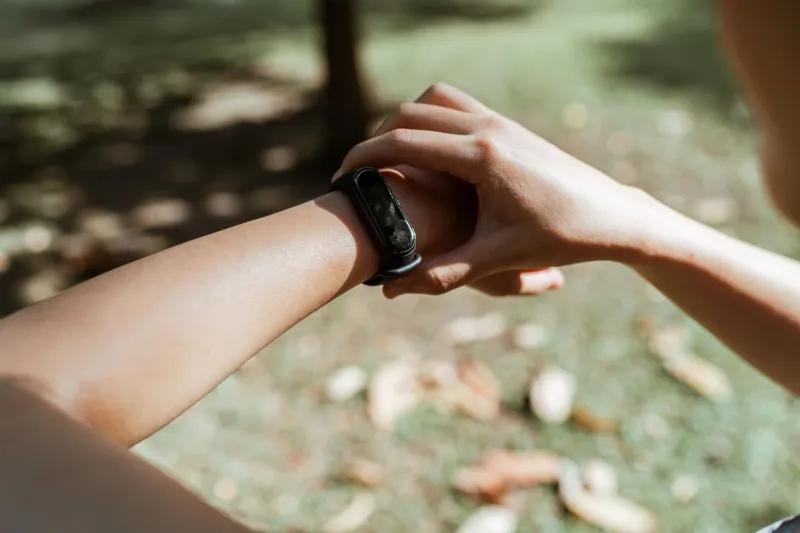
It starts innocently enough. You strap on a shiny new fitness tracker, excited by the idea of finally getting a handle on your health. Within a week, you're glancing at your wrist every ten minutes, feeling vaguely guilty if you haven't hit 8,000 steps by lunchtime, and lying awake wondering whether your sleep score was actually that bad.
Sound familiar? You're far from alone.
Wearable health technology — from Apple Watches and Fitbits to Garmin bands and Oura rings — has exploded in popularity across the UK. According to Statista, nearly a third of British adults now own some form of wearable device. The pitch is compelling: real-time data about your body, your sleep, your stress levels, your heart rate. Knowledge is power, right?
Except that for a growing number of people, all that data isn't translating into better health. It's translating into something that looks a lot more like anxiety.
When Data Becomes a Burden
There's a term that's been quietly gaining traction in clinical psychology circles: orthosomnia. First described in a 2017 paper published in the Journal of Clinical Sleep Medicine, it refers to the obsessive pursuit of perfect sleep — often triggered by sleep-tracking devices. People become so fixated on their sleep data that the anxiety about achieving a good score actually prevents them from sleeping well in the first place.
It's a neat little irony. The tool designed to improve your rest ends up ruining it.
But the problem doesn't stop at sleep. Behavioural health experts have noted similar patterns with step counting, calorie tracking, and heart rate monitoring. When numbers become the primary measure of how well you're doing, the subjective experience of your own body gets quietly pushed aside.
"There's a real risk that people start outsourcing their body awareness to a device," says Dr. Naomi Harte, a health psychologist based in Bristol. "They stop asking 'how do I feel today?' and start asking 'what does my tracker say about how I feel?' That's a significant shift, and not always a healthy one."
The Anxiety Loop Nobody Warned You About
Here's how it tends to play out. You notice your resting heart rate is slightly elevated. Your tracker flags it. You google it. Now you're anxious — which, predictably, raises your heart rate further. The tracker picks that up too. More anxiety. Repeat.
Or perhaps you've had a stressful week at work and your step count has taken a hit. Rather than recognising that life sometimes gets in the way and being kind to yourself about it, the app sends you a cheerful notification telling you you're 43% below your weekly goal. Cheers for that.
This kind of constant self-monitoring can tip over into something clinically significant. Research published in the journal Psychology of Sport and Exercise found that high levels of exercise self-tracking were associated with increased obsessive-compulsive tendencies around physical activity. In other words, the more closely people tracked their workouts, the more rigid and anxiety-driven their relationship with exercise became.
For individuals already prone to perfectionism or disordered thinking around food and exercise, wearable tech can act as an accelerant rather than a remedy.
The Quantified Self vs. The Actual Self
There's a broader cultural conversation worth having here. We live in an age that prizes measurement. We track our finances, our productivity, our social media engagement — so why wouldn't we track our bodies too? The "quantified self" movement, which originated in Silicon Valley and has well and truly reached British shores, operates on the assumption that more data equals better decisions.
But human wellbeing is stubbornly resistant to being reduced to numbers. A good night's sleep isn't just about REM cycles and heart rate variability. It's about waking up and feeling rested. A good workout isn't about hitting a calorie target — it's about feeling strong, energised, and glad you moved your body. When we fixate on the metrics, we risk losing touch with the actual experience.
There's also the issue of accuracy. Consumer-grade wearables, for all their impressive marketing, are not medical devices. Studies have repeatedly shown that fitness trackers can be significantly off when measuring calorie burn, sleep stages, and even step counts. Yet many users treat the numbers as gospel — making decisions about their diet, rest, and exercise based on data that may be unreliable.
So Should You Ditch the Tracker Altogether?
Not necessarily. For some people, wearables genuinely are useful. If you're recovering from a cardiac event and your GP has recommended monitoring your heart rate, that's a very different context. If you're training for a marathon and want structured feedback on your pacing and recovery, data can be a legitimate tool.
The problem isn't the technology itself — it's the relationship we have with it.
Here are a few signs that your tracker might be doing more harm than good:
- You feel anxious or guilty when you haven't hit your daily targets
- You check your device compulsively throughout the day
- You've cancelled plans or pushed through illness to close your activity rings
- You feel like a failure on rest days, even when rest is exactly what your body needs
- Your sleep has got worse since you started tracking it
If any of those resonate, it might be worth stepping back.
Reclaiming Your Body's Own Intelligence
Your body has been communicating with you far longer than any wearable has existed. Fatigue, hunger, soreness, energy — these signals are rich with information, and learning to listen to them is a skill worth cultivating.
Try going device-free for a week. Go for a walk without counting steps. Exercise based on how you feel rather than what a screen tells you. Eat when you're hungry, sleep when you're tired, rest when you're worn out. It might feel strange at first — even a little uncomfortable — but many people find it quietly liberating.
If you do want to keep using your tracker, consider setting some boundaries around it. Check it once a day rather than constantly. Turn off the notifications. Treat the data as one source of information among many, rather than the definitive verdict on your health.
"I always encourage my clients to use technology as a conversation starter with their bodies, not a replacement for that conversation," says Dr. Harte. "The goal is self-awareness, not self-surveillance."
The Bottom Line
Wellbeing isn't a score. It isn't a streak, a ring, or a percentage. It's something you feel — in your energy levels, your mood, your relationships, your capacity to enjoy life. No algorithm has cracked that yet, and frankly, it's unlikely one ever will.
Your fitness tracker might be a handy tool. But it shouldn't be your boss. And it definitely shouldn't be the thing standing between you and a decent night's sleep.
Sometimes the healthiest thing you can do is put the gadget in a drawer, go outside, and just be a human being for a bit.